.png)
Barefoot Shoes and Your Spine: Can What You Wear on Your Feet Improve Back Health?

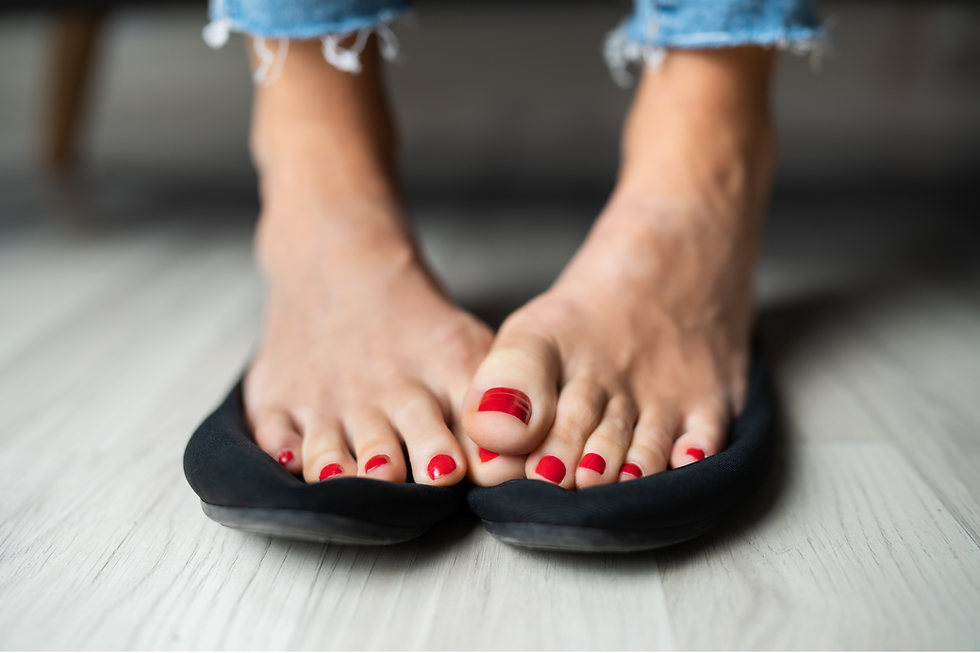
Your feet are the foundation of your body. Every step you take sends forces through your ankles, knees, hips, and spine. While many people focus on stretching, strengthening, or chiropractic care to improve back pain, they often overlook one important factor: their shoes.
Barefoot shoes have become increasingly popular because they encourage more natural foot movement and may help improve posture, balance, and spinal mechanics. While they aren't the right choice for everyone, they can be an excellent tool for improving overall musculoskeletal health when introduced gradually.
What Are Barefoot Shoes?
Barefoot shoes are designed to mimic walking barefoot while still protecting your feet. Unlike traditional athletic shoes, they typically feature:
A wide toe box that allows your toes to spread naturally
A thin, flexible sole for better ground feedback
Zero-drop construction, meaning the heel and forefoot are at the same height
Minimal cushioning to encourage natural movement
These features allow your feet to function the way they were designed.
How Your Feet Affect Your Spine
Think of your body like a chain. If one link isn't functioning properly, the rest of the chain has to compensate.
When your feet lose strength or mobility from years of wearing restrictive footwear, changes can occur throughout the body:
Reduced foot stability
Altered walking mechanics
Increased stress on the knees and hips
Changes in pelvic position
Additional strain placed on the lower back
Because your spine sits on top of this entire kinetic chain, healthy feet play an important role in maintaining proper posture and efficient movement.
The Benefits of Barefoot Shoes for Spine Health
1. Stronger Foot Muscles
Your feet contain more than 100 muscles, tendons, and ligaments that help stabilize your entire body.
Supportive shoes often do much of the work for these muscles, allowing them to weaken over time. Barefoot shoes encourage the intrinsic foot muscles to become more active, improving stability from the ground up.
A stronger foundation often means less unnecessary movement and stress throughout the spine.
2. Improved Balance and Proprioception
The thin soles of barefoot shoes allow your feet to better sense the ground beneath you.
This increased sensory input, known as proprioception, helps your brain make quicker adjustments to maintain balance and posture.
Improved balance can reduce compensatory movement patterns that contribute to neck and back discomfort.
3. Better Walking Mechanics
Traditional shoes with elevated heels often encourage heel striking and can alter the body's alignment.
Barefoot shoes promote a more natural walking pattern that may:
Reduce excessive impact forces
Encourage shorter, more efficient strides
Improve hip mobility
Reduce stress through the lumbar spine
Over thousands of steps each day, these small improvements can add up.
4. Improved Posture
Many cushioned shoes elevate the heel higher than the forefoot.
Even a small heel lift can subtly shift your center of gravity forward, causing compensations throughout the body.
Zero-drop barefoot shoes allow your body to stand in a more natural position, encouraging better alignment from your feet to your head.
Are Barefoot Shoes Right for Everyone?
Not necessarily.
If you've spent years wearing supportive shoes, switching overnight can overload tissues that haven't been challenged in a long time.
Some people may initially experience:
Calf soreness
Foot fatigue
Achilles tightness
Mild muscle soreness
These symptoms are often temporary as your body adapts, but transitioning too quickly can increase the risk of injury.
Tips for Transitioning Safely
If you're interested in trying barefoot shoes, ease into them gradually.
Start by:
Wearing them for 20–30 minutes each day.
Walking on flat, even surfaces first.
Performing foot-strengthening exercises.
Stretching your calves regularly.
Gradually increasing wear time over several weeks.
Your feet, ankles, and spine need time to adapt.
Chiropractic Care and Barefoot Shoes
Barefoot shoes are one piece of the puzzle.
If poor movement patterns, joint restrictions, or muscle imbalances already exist, simply changing your shoes may not fully resolve the issue.
At West End Chiropractic, we evaluate how your feet, ankles, hips, pelvis, and spine work together during movement. Chiropractic adjustments, mobility exercises, and rehabilitation can help restore proper function throughout the entire kinetic chain while supporting your transition into healthier movement habits.
Our goal isn't just to relieve pain—it's to help your body move the way it was designed.
Final Thoughts
Healthy movement starts from the ground up.
Barefoot shoes may help improve foot strength, posture, balance, and walking mechanics, all of which can positively influence spinal health. While they aren't a miracle cure, they can be an effective part of a comprehensive approach that includes exercise, mobility training, and chiropractic care.
If you're struggling with recurring back pain, neck pain, or poor posture, consider looking beyond your spine and starting with your foundation—your feet.
Ready to Move Better?
If you're curious whether barefoot shoes are appropriate for you or you're dealing with back, hip, knee, or foot pain, our team at West End Chiropractic can help assess your movement patterns and develop a personalized treatment plan to keep you moving pain-free.


Comments